


5 Simple Ways to Practice Gratitude and Meditation
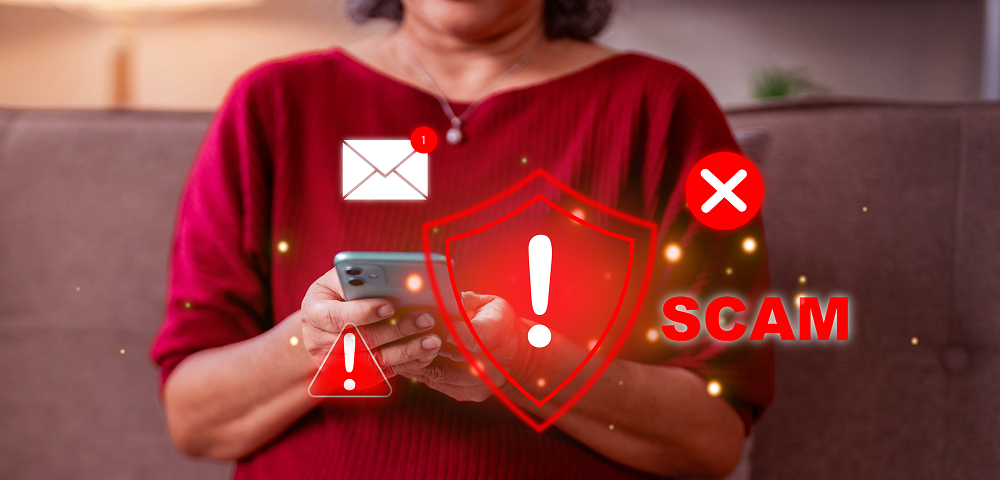
Beyond making daily life easier, technology also gives scammers new tools. Artificial intelligence (AI) can clone a loved one’s voice, write polished messages in seconds, and even create fake videos. Scammers can re-design all of these skills to rush you into sending money or sharing information. Below, we explain what’s new, what to watch for, and how older adults in the Pittsburgh region can stay safe without giving up the tech that keeps us connected.
How AI is Changing Scams
 Voice cloning “Hi Grandma” calls: Criminals use short audio clips from social media or voicemails to mimic a family member’s voice and ask for urgent help or money. The Federal Trade Commission (FTC) warns that caller ID can be spoofed, and voices can sound remarkably real, so always verify.
- Polished texts and emails: AI tools help criminals write convincing messages that look like they’re from banks, delivery services, or even your doctor’s office. The goal is to push you to click a link, download a file, or share codes and passwords.
- Deepfake photos and videos: While still less common, these highly realistic fake images or videos convincingly alter or replace someone’s face or face using AI technology. Scammers might create videos that appear to show a trusted relative asking for urgent financial help or photos that seem to place someone in compromising or official-looking situations. When in doubt, slow down, verify on a second channel, and don’t pay under pressure. These manipulative tactics prey on emotions and urgency, so it’s critical to verify such claims through direct contact with the supposed individual or by consulting trusted parties before taking any action.
Fraud reports and financial losses are rising. In 2024, senior citizens reported nearly $2.4 billion in financial losses to scams and fraud, according to the FTC. AI doesn’t create new scams as much as it supercharges old ones: impostor (“grandparent”) scams, tech support schemes, fake investments, charity appeals, and romance fraud.
Red Flags to Recognize Every Time
 Urgency and secrecy: “Don’t tell anyone.” “Act now.” “This is the only way to fix it.”
- Unusual payment requests: Gift cards, wire transfers, cryptocurrency, or peer-to-peer apps for a “first-time” payment.
- Account recovery codes: Anyone asking you to read out one-time passcodes (text or email) is trying to break into your account.
- Change in payment instructions: “New bank details” in an email or text, especially for large bills.
- Spoofed contact info: Caller ID, email names, and logos can be faked. Always verify with a known phone number or website.
- Pop-ups directing you to call a “support” number: Real companies don’t lock your screen and demand a call.
A 5-minute Security Tune-up
 Turn on multi-factor authentication (MFA): Add MFA to email, banking, and social media. Use an authenticator app when available.
- Create strong, unique passwords: Use a password manager and long passphrases you don’t reuse across accounts.
- Set alerts with your bank and credit cards: Get texts or emails for transactions, sign-ins, and money transfers.
- Update devices automatically: Keep your phone, computer, and apps patched.
- Agree on a family “safe word”: If you get a distress call, ask for the code. No code, no action.
- Freeze your credit if you don’t plan to borrow soon: This free step helps prevent new account fraud.
What To Do If You’re Targeted
- If you get a suspicious call: Hang up. Call back to a number you already trust, such as one found on a card, bill, or official website. Do not rely on caller ID.
- If you clicked a link or shared a code: Immediately change that account’s password, enable MFA, and check recent activity.
- If your identity may be at risk: Get step-by-step recovery plans at IdentityTheft.gov
Trustworthy Resources in the Pittsburgh Area
- Allegheny County Area Agency on Aging: Protective services, benefits counseling, and support for older adults in our region.
- Pennsylvania Office of Attorney General: Education and help for seniors; file complaints or learn about active scams.
- AARP Fraud Watch Network: Up-to-date alerts on emerging scams, including AI voice cloning and impostor fraud.
A Simple Plan for Verifying Requests
 Pause: Scammers rely on speed. Take a beat.
- Verify on a second channel: If you get a request by phone, confirm by calling a known number or sending a fresh text to the person’s usual number.
- Check the ask: Real organizations don’t demand gift cards, crypto, or secrecy.
- Trust your gut: If something feels off, stop and verify.
Keep Technology Positive and Safe
Technology still offers tremendous benefits: telehealth, smart-home safety, staying connected, and more. With a few practical safeguards, you can enjoy the good while avoiding the bad. Share this information with family and caregivers so everyone knows how to spot AI-enabled tricks and how to respond with confidence.
At Envisage®, we’re dedicated to promoting healthy living—and safe living—for older adults who want to age at home with confidence. If you’d like personalized guidance on practical tech safety steps or help connecting with trusted local resources, Envisage offers one‑on‑one support. Schedule a 1:1 conversation today!